learn about adrain piper at www.adrianpiper.com
Dear Editor:
Please don’t call me a black artist.
Please don’t call me a black philosopher.
Please don’t call me an African American artist.
Please don’t call me an African American philosopher.
Please don’t call me a woman artist.
Please don’t call me a woman philosopher.
Please don’t call me a female artist.
Please don’t call me a female philosopher.
Please don’t call me a black woman artist.
Please don’t call me a black woman philosopher.
Please don’t call me an African American woman artist.
Please don’t call me an African American woman philosopher.
Please don’t call me a black female artist.
Please don’t call me a black female philosopher.
Please don’t call me an African American female artist.
Please don’t call me an African American female philosopher.
Please don’t call me a female black artist.
Please don’t call me a female black philosopher.
Please don’t call me a female African American artist.
Please don’t call me a female African American philosopher.
Please don’t call me an artist who happens to be black.
Please don’t call me a philosopher who happens to be black.
Please don’t call me an artist who happens to be African American.
Please don’t call me a philosopher who happens to be African American.
Please don’t call me an artist who happens to be a woman.
Please don’t call me a philosopher who happens to be a woman.
Please don’t call me an artist who happens to be female.
Please don’t call me a philosopher who happens to be female.
Please don’t call me an artist who happens to be black and a woman.
Please don’t call me a philosopher who happens to be black and a woman.
Please don’t call me an artist who happens to be a woman and black.
Please don’t call me a philosopher who happens to be a woman and black.
Please don’t call me an artist who happens to be African American and a woman.
Please don’t call me a philosopher who happens to be African American and a woman.
Please don’t call me an artist who happens to be a woman and African American.
Please don’t call me a philosopher who happens to be a woman and African American.
Please don’t call me an artist who happens to be black and female.
Please don’t call me a philosopher who happens to be black and female.
Please don’t call me an artist who happens to be female and black.
Please don’t call me a philosopher who happens to be female and black.
Please don’t call me an artist who happens to be African American and female.
Please don’t call me a philosopher who happens to be African American and female.
Please don’t call me an artist who happens to be female and African American.
Please don’t call me a philosopher who happens to be female and African American.
Please don’t call me a black artist and philosopher.
Please don’t call me a black philosopher and artist.
Please don’t call me an African American artist and philosopher.
Please don’t call me an African American philosopher and artist.
Please don’t call me a woman artist and philosopher.
Please don’t call me a woman philosopher and artist.
Please don’t call me a female artist and philosopher.
Please don’t call me a female philosopher and artist.
Please don’t call me a black woman artist and philosopher.
Please don’t call me a black woman philosopher and artist.
Please don’t call me an African American woman artist and philosopher.
Please don’t call me an African American woman philosopher and artist.
Please don’t call me a black female artist and philosopher.
Please don’t call me a black female philosopher and artist.
Please don’t call me an African American female artist and philosopher.
Please don’t call me an African American female philosopher and artist.
Please don’t call me a female black artist and philosopher.
Please don’t call me a female black philosopher and artist.
Please don’t call me a female African American artist and philosopher.
Please don’t call me a female African American philosopher and artist.
Please don’t call me an artist and philosopher who happens to be black.
Please don’t call me a philosopher and artist who happens to be black.
Please don’t call me an artist and philosopher who happens to be African American.
Please don’t call me a philosopher and artist who happens to be African American.
Please don’t call me an artist and philosopher who happens to be a woman.
Please don’t call me a philosopher and artist who happens to be a woman.
Please don’t call me an artist and philosopher who happens to be female.
Please don’t call me a philosopher and artist who happens to be female.
Please don’t call me an artist and philosopher who happens to be black and a woman.
Please don’t call me a philosopher and artist who happens to be black and a woman.
Please don’t call me an artist and philosopher who happens to be a woman and black.
Please don’t call me a philosopher and artist who happens to be a woman and black.
Please don’t call me an artist and philosopher who happens to be African American and a woman.
Please don’t call me a philosopher and artist who happens to be African American and a woman.
Please don’t call me an artist and philosopher who happens to be a woman and African American.
Please don’t call me a philosopher and artist who happens to be a woman and African American.
Please don’t call me an artist and philosopher who happens to be black and female.
Please don’t call me a philosopher and artist who happens to be black and female.
Please don’t call me an artist and philosopher who happens to be female and black.
Please don’t call me a philosopher and artist who happens to be female and black.
Please don’t call me an artist and philosopher who happens to be African American and female.
Please don’t call me a philosopher and artist who happens to be African American and female.
Please don’t call me an artist and philosopher who happens to be female and African American.
Please don’t call me a philosopher and artist who happens to be female and African American.
Dear Editor,
I hope you will bring to my attention any permutations I have overlooked.
I write to inform you that
I have earned the right to be called an artist.
I have earned the right to be called a philosopher.
I have earned the right to be called an artist and philosopher.
I have earned the right to be called a philosopher and artist.
I have earned the right to call myself anything I like.
Thank you in advance for your consideration.
Adrian Piper
1 January 2003
Thursday, April 24, 2008

Tuesday, April 08, 2008
Nana in the Garden: Taking Care of Ourselves

Joyce McKenzie, my Nana, can make anything grow. Look at me. First grandchild with the flowering hair, the undisciplinable body, granddaughter of a once undocumented immigrant (my Nana) with a migrant spirit, nomad hands and a disdain for passports. Some people know how to make anything grow. Even the most difficult, unpredictable shoots of hope we have.
This is for Nana. Nana who snuck into my room to end my cough by rubbing white rum on my chest. Nana who made me drink all kinds of things I was afraid of. "Drink it down! While it's hot!" Nana of the lemon and honey. Nana of the best soup EVER. Nana of the cornmeal porridge. Nana of the the cod-liver oil. Nana of the seven seas. Nana who reminds me every month to get a British Passport. Nana who knows why one citizenship is not enough. Nana of the golden seal. Nana who finds sweaters and wool pants in South Florida to mail North "for my little professor". Nana of the box of oranges mailed from Florida to the New York City dorm room twice a winter. Nana of the Valentine's Day cards, the Easter Cards, the it's Wednesday and I love my granddaughter cards. Nana who sent me the microwave and the rice cooker, anything to get that skinny child to eat. Some people know how to nurture even the most threatened and least cooperative green young things.
Nana is from Jamaica. Which means we are from Jamaica. None of us will never get used to frost. And since Nana lives in central Florida she rarely has to. Just last month she called incredulous about a freeze that cut short the life of her hibiscus flowers. Today she told me that she will be planting roses again. I love my hibiscus, but roses are hardy, she said. They know how to survive the winter. Everything Nana says is advice, whether she knows it or not. I need to embroider that somewhere. "They know how to survive the winter." But even though I have a sewing machine in my old school living room, near the mantle that features a picture of me as a little kid between my two grandmothers. Even though my Grandma Lydia Gumbs went to Pratt, sewed the prize winning graduation dress, and made me the most elaborate halloween costumes, my own black raggedy-ann dolls, I haven't learned how to sew yet.
And even though Nana has grown mangoes, oranges, bananas, hibiscus, roses and more in backyards from Miami to Lakeland, I haven't learned to garden yet either. If it wasn't for my partner even my bamboo would probably have withered long ago. But now...along with the womyn in the SPEAK collective and the remnants of UBUNTU the unruly, ungrounded shake in my hands is meeting the earth. It is time to take care of ourselves. My backyard (or our yard behind the house I rent) is about to become our community garden. Basil, tomatoes, lettuce, goldfish, marigolds, rainbarrels, compost, corn, cucumbers. I know nothing about any of this, but some people know how to make anything grow. Even me.
This morning Nana had surgery. A lumpectomy and for five days she will be having radiation. Yesterday Nana made her famous soup..with the dumplings in it...I'm hungry even thinking about it. My mother is in Florida with Nana doing a raw fruit and vegetable fast (which means she couldn't eat the soup either!). She is confident telling me that she will be okay. And I believe and intend that she will recover quickly. She has already promised to come boss us around here in the garden in Durham. And next month my mother is fulfilling her lifelong goal to become a doula by participating in a doula training specifically for women of color co-sponsored by SisterSong. And Mama Nayo said she'd come back to us as babies or corn. And we are alive and growing. We are taking care of ourselves.
Blessed are the gardeners. We know how to make each other grow. Hold my Nana in your thoughts.
love,
lex
p.s. this is also for Sanesha Stewart's grandmother who I was blessed to hear speak at the beautiful vigil in her honor at the Bronx Community Pride Center this weekend. Outliving our grandmothers is hard. We cannot afford to outlive our granddaughters. Hold in your thoughts a beautiful loving woman who is outliving her granddaughter now because of transphobic violence.
Monday, March 31, 2008
Nobody Can Say it Better...
Sudy posted this on her blog: http://myecdysis.blogspot.com/
about SPEAK womyn of color blogger collective's participation in this weekend's Women "Action" and the media conference:LIVE Blogging from WAM: Say Thank You
It's not easy hosting brilliant feminist thinkers in one apartment. Adonis and I welcomed BFP, Nadia, Lex, and Jess Hoffman from Make/Shift into our humble abode and are trying to keep up with everyone's energy.
This morning, we were cutting it a bit close as I drove like a mad womyn through the crowded streets of Boston to get BFP to her 11am session. We arrived at 10:54am and I ran through the parking lot to make it in time for the opening talks. The speech BFP gave can be found on her blog. There's no way to sum up the injustices that are happening on our borders and how womyn are being abused, beated, mocked, and torn away from their children. But, the panel was really terrific and shed light on an issue that cannot be denied as a womyn's issue. Including myself in this vow, for those who ignore the violence at the border done to migrant womyn, it is erroneous to claim one is a feminist or engages in feminist discourse. These continuous infractures of human rights on US soil is a feminist issue. Period.
The Radical Womyn of Color Bloggers' Caucus had a few bumpy spots, to say the least. Our room was double booked and we got booted to another building. By the time we got settled and going, we only had 30 minutes left of a one hours session. Nonetheless, those 30 minutes were filled with question, passion, and struggle. What amazes me most about deep conversations with womyn of color is how different we are, how contrasting our opinions can be, but somehow it stays streamlined and flows with the utmost respect and understanding.
The second session was the one I originally proposed, "We B(e)lo(n)g: Womyn of Color and Online Feminism. The space that we created was filled with incredible voices and generous minds who spoke gratitude, wishes, and vision for a world of healing, belief, and justice. I wasn't sure how the session was going to go, but I know that there was one moment that I will never forget for the rest of my life.
After the session, I was catching up with Adele Nieves about her rocking book proposal for which she has worked her patooty off. A young womyn, maybe 19 or 20, stood quietly behind me and tapped me on the shoulder. I turned and recognized her fresh eyes and smile - a radiant participant in the session I just helped convene. She threw her arms around me and whispered into my ear, "Thank you. I have to go, but thank you." When I pulled back to see her face, she skittered off and left before I could ask her name.
That moment will likely fill me for many days to come. A simple, conventional gesture turned miraculous offering, an embrace of thanksgiving gave me a clarity that can only come with such a young person. What I helped create helped someone else. I don't know how, why, or to what depth. But, a stranger's embrace healed any pain I had felt that week and any anxiety I had about the presentation. I touched one.
And she thanked me.
I was left to ponder Gloria Anzaldua. This young womyn and her fierce Thank You reminded me exaclty how I felt when I read Gloria Anzaldua for the first time. I was overcome not only by her power, but what came out of me because of her honesty. I became a better human because of her work.
I'd like to think that perhaps, in a small way, I helped someone else today too.
Contigo,
Sudy
Wednesday, March 26, 2008
Sprung Already!: This is What Radical Love Looks Like
Note: This entire post is sparked by the video brilliance of Shannon, Sudy and Nia and the talent of my community. Please do yourself the honor of seeing Mama Nia's editing, Rachael 's voice and Mama Nayo's beautiful face on the tribute video "Nothing is Destroyed"

Another world is not only possible, it’s already here, working and growing in our communities. Can you see it? Brokenbeautiful Press is proud to announce the launch of our new community video portal “What it Look Like” featuring the radical, subversive, beautiful and challenging work of community building made visible.
“What it look like?” is a homegrown question about where we are (going). We ask “what it look like?” to begin a conversation, assess a situation and open ourselves to possibilities. This new interactive space is about the BrokenBeautiful possibility of connecting our communities, remembering what we already know how to do, and firmly forgetting the corporate media’s shuck and jive.
Click here to view the first set of videos and email brokenbeautifulpress@gmail.com to add your home-made videos, slideshows or photos of your community in action to the site.
Tuesday, March 18, 2008
Statement in Solidarity with Palestine

INCITE! Women of Color Against Violence endorses the following statement (and so do i!) ~~~ Given that International Women's Day coincided with the catastrophic events in Gaza, please show your solidarity by signing the statement below from the Campaign of Solidarity with Women Resisting U.S. Wars and Occupation. You can send your name, affiliation, and place of residence to: solidaritywomen@yahoo..com. Piya Chatterjee & Sunaina Maira
An Open Letter to All Feminists:
Statement of Solidarity with Palestinian, Arab, and Muslim Women
Facing War and Occupation
As feminists and people of conscience, we call for solidarity with Palestinian women in Gaza suffering due to the escalating military attacks that Israel turned into an open war on civilians. This war has targeted women and children, and all those who live under Israeli occupation in the West Bank, and are also denied the right to freedom of movement, health, and education. We stand in solidarity with Iraqi women whose daughters, sisters, brothers, or sons have been abused, tortured, and raped in U.S. prisons such as Abu Ghraib. Women in Iraq continue to live under a U.S. occupation that has devastated families and homes, and are experiencing a rise in religious extremism and restrictions on their freedom that were unheard of before the U.S. invasion, "Operation Iraqi Freedom," in 2003. At this moment in Afghanistan, women are living with the return of the Taliban and other misogynistic groups such as the Northern Alliance, a U.S. ally, and with the violence of continuing U.S. and NATO attacks on civilians, despite the U.S. war to "liberate" Afghan women in 2001. As of March 6, 2008, over 120 Palestinians, including 39 children and 6 women (more than a third of the victims), in Gaza were killed by Israeli air strikes and escalated attacks on civilians over a period of five days, according to human rights groups.[1] Hospitals have been struggling to treat 370 injured children, as reported by medical officials. Homes have been destroyed as well as civilian facilities including the headquarters of the General Federation of Palestinian Trade Unions.[2] On February 29, 2008, Israel's Deputy Defense Minister, Matan Valnai, threatened Palestinians in Gaza with a "bigger Shoah," the Hebrew word usually used only for the Holocaust.[3] What does it mean that the international community is standing by while this is happening? Valnai's threat of a Holocaust against Palestinians was not just a slip of the tongue, for the war on Gaza is a continuation of genocidal activities against the indigenous population. Israel has controlled the land and sea borders and airspace of Gaza for more than a year and a half, confining 1.5 million Palestinians to a giant prison. Supported by the U.S., Israel has imposed a near total blockade on Gaza since June 2007 which has led to a breakdown in basic services, including water and sanitation, lack of electricity, fuel, and medical supplies. As a result of these sanctions, 30% of children under 5 years suffer from stunted growth and malnutrition. Over 80% of the population cannot afford a balanced meal.[4] Is this humanitarian crisis going to approach a situation similar to that of the sanctions against Iraq from 1991-2003, when an estimated 500,000 Iraqi children died to lack of nutrition and medical supplies, and the woman who was then Secretary of State, Madeline Albright, proclaimed that the death of a half million Iraqi children was worth the price of U.S. national security? As feminists and anti-imperialist people of conscience, we oppose direct and indirect policies of ethnic cleansing and decimation of native populations by all nation-states. In the current climate of U.S.-initiated or U.S.-backed assaults on women in Palestine, Iraq, and Afghanistan, we are deeply troubled by one kind of hypocritical Western feminist discourse that continues to be preoccupied with particular kinds of violence against Muslim or Middle Eastern women, while choosing to remain silent on the lethal violence inflicted on women and families by military occupation, F-16s, Apache helicopters, and missiles paid for by U.S. tax payers. This is a moment when U.S. imperialism brazenly uses direct colonial occupation, masked in a civilizational discourse of bringing Western "freedom" and "democracy." Such acts echo the language of Manifest Destiny that was used to justify U.S. colonization of the Philippines and Pacific territories in the 19th century, not to mention the genocide of Native Americans. U.S. covert, and not so covert, interventions in Central, South America, Africa, Asia, and the Caribbean have devastated the lives of countless indigenous peoples, and other civilians, in this region throughout the 20th century. The U.S., as well its proxy militias or client regimes, has inflicted violence on women and girls from Vietnam, Okinawa, and Pakistan to Chile, El Salvador, and Somalia and has avenged the deaths of its soldiers by its own "honor killings" that lay siege to entire towns, such as Fallujah in Iraq. It is appalling that in these catastrophic times, many U.S. liberal feminists are focused only on misogynistic practices associated with particular local cultures, as if these exist in capsules, far from the arena of imperial occupation. Indeed, imperial violence has given fuel to some of these patriarchal practices of misogyny and sexism. They should also know that such a narrow vision furthers a much older tradition of feminist mobilizing in the service of colonialism—"saving brown, or black women, from brown men," as observed by Gayatri Spivak. While we too oppose abuses including domestic violence, "honor killings," forced marriage, and brutal punishment, we are disturbed that some U.S. feminists—as well as Muslim or Middle Eastern women who claim to be "authorities" on Islam and are employed by right-wing think tanks—are participating in a selective discourse of universal women's rights that ignores U.S. war crimes and abuses of human rights. While some progressive U.S. feminists claim to oppose the hijacking of women's rights to justify U.S. invasions, they simultaneously evade any mention about the plight of women in Palestine, Iraq, or Afghanistan. Their statements continue to focus only on female genital mutilation or dowry deaths under the guise of breaking the "politically correct" silence on abuses of women in the "Muslim world" that the Right disingenuously laments.[5] Some progressives may support such statements with good intentions, but these critiques ignore the fact that Palestinian, Arab, and Muslim feminists have been working on these issues for generations, focusing on the intersections of gender, sexuality, race, class, and nationalism. Their work is ignored by North American feminists who claim to advocate for a "global sisterhood" but are disillusioned to discover that women in the U.S. military participated in the acts of torture at Abu Ghraib. We are concerned about these silences and selective condemnations given that the U.S. mainstream media bolsters this imperialist feminism by using an (often liberal) Orientalist approach to covering the Middle East or South Asia. For example, on March 5, 2008, as the death toll due to Israeli attacks in Gaza was mounting, the New York Times chose to publish an article just below its report on the Israeli military incursions that focused on the sentencing of a Palestinian man in Israel for an honor killing; the report was deemed worthy of international coverage because the Palestinian women had broken "the code of silence" by resorting to Israeli courts.[6] The implications of this juxtaposition of two unrelated events are that Palestinians belong to a backward, patriarchal culture that, rightly or wrongly, is under attack by a modern, "democratic" state with a legal apparatus that supports women's rights. Others have shown that the New York Times gave disproportionate attention to the Human Rights Watch report in 2006 on domestic violence against Palestinian women relative to its scant mention of the 76 reports of Israeli abuses of Palestinian rights by Human Rights Watch, Amnesty International, and the Israeli organization, B'Tselem.[7] Similar coverage exists of women from other countries outside the U.S. that are portrayed as victims only of their own cultural traditions, rather than also of the ravages of Western imperialism and predatory global capitalism. No attention is paid in the mainstream U.S. media to reports such as that in Haaretz documenting that Palestinian women citizens of Israel are the most exploited group in the Israeli workforce, making only 47% of the wages earned by their Jewish counterparts in Israel, and with double the rate of unemployment of Jewish women.[8] Little is known in the U.S. about what the lives of Iraqi women are really like now that they are pressured to cover themselves in public or not work outside the house, nor of Afghani women whose homes are still being bombed in a war that was supposed to have liberated them many years ago. We stand in solidarity with feminist and liberatory movements that are opposing U.S. imperialism, U.S.-backed occupation, militarism, and economic exploitation as well as resisting religious and secular fundamentalisms. We also support the struggles of those within the U.S. opposing the War on Terror and racist practices of detention, deportation, surveillance, and torture linked to the military-industrial-prison complex that selectively targets immigrants, minorities, and youth of color. We are grateful for the courageous scholarship of academics who are at risk of not getting tenure or employment because they do research related to settler colonialism or taboo topics such as Palestinian rights and expose controversial aspects of U.S. policies here and abroad. At a moment when U.S. military interventions have made "democracy" a dirty word in much of the world, we strive for true democracy and for freedom and justice for all our sisters and brothers. Piya Chatterjee, University of California-Riverside Sunaina Maira, University of California-Davis Campaign of Solidarity with Women Resisting U.S. Wars and Occupation South Asians for the Liberation of Falastin
[1] "The Tragedy in Gaza," Kinder USA, www.kinderusa.org. March 5, 2008. [2] Weekly Report on Israeli Human Rights Violations in the Occupied Palestinian Territory: "Wide-Scale Israeli Military Operations Against the Gaza Strip." Palestinian Centre for Human Rights, http://www.pchrgaza.org. March 6, 2008. [3] Rory McCarthy, "Israeli Minister Warns of Holocaust for Gaza if Violence Continues." The Guardian, March 1, 2008. www.guardian.co.uk. [4] "The Tragedy in Gaza." [5] For example, Katha Pollitt's petition, "An Open Letter from American Feminists," posted at: http://www.motherjones.com
Thursday, March 13, 2008
Your thoughts on blackness, womanness, and artistic process wanted for an oh so important performance process
The Questionnaire
You thought you were too far away to participate in a performance process going on in NYC, well you were wrong.Calling all sistas who got something to say about blackness, womanness and artistic process.Visit www.iamnotaproject.wordpress.com for more information
Please answer the questions below in any form you choose: a poem, letter, story, list, sketch, dance, meal, outfit or what ever!
Then send it to me at furiousflower@gmail.com along with a bio and picture or yourself and what you created.
Please note if you want your ideas to be kept private, just let me know and I will honor your wishes
So here is the assignment:
As the Gumbo Yaya Sistren transition into thinking about our personal narratives of healing and spirituality, I would like to extend this process around awareness, identification, and literary production to all the sistas who come in contact with this email.
-please complete the questionnaire below
then,
choose one of the following prompts and engage with it in your own way-
-a letter written to yourself as an infant
-a letter written to yourself as an elder
-an interview between you and a sista younger or older than you.
Questionnaire-
Please answer the following prompts-
-what does it mean to be a black woman to you? do you identify yourself as a black woman?
-what is black women’s art? is this important to identify? should art be universal?
-what does it mean to be an artist to you? do you identify yourself as an artist?
-what does womanism mean to you? do you identify yourself as womanist?
-if you could ask your mother one question about her journey as a black woman or artist, womanist, or spiritualist, what would you ask her?
-if you could ask your daughter or future daughter about her journey as a black woman or artist, womanst, or spiritualist, what would you ask her?
-is there anything that gets in the way of your process as a black woman artist womanist spiritualist?
-is there anything that supports your process as a black woman artist womanist spiritualist?
-what does an artistic process look like to/for you? do you have an artistic process?
-what comprises a womanist artistic process? is there such a process? should we (we being black women cultural producers) be concerned with this process?
Life and Peace,
Ebony Golden
furiousflower@gmail.com
You thought you were too far away to participate in a performance process going on in NYC, well you were wrong.Calling all sistas who got something to say about blackness, womanness and artistic process.Visit www.iamnotaproject.wordpress.com for more information
Please answer the questions below in any form you choose: a poem, letter, story, list, sketch, dance, meal, outfit or what ever!
Then send it to me at furiousflower@gmail.com along with a bio and picture or yourself and what you created.
Please note if you want your ideas to be kept private, just let me know and I will honor your wishes
So here is the assignment:
As the Gumbo Yaya Sistren transition into thinking about our personal narratives of healing and spirituality, I would like to extend this process around awareness, identification, and literary production to all the sistas who come in contact with this email.
-please complete the questionnaire below
then,
choose one of the following prompts and engage with it in your own way-
-a letter written to yourself as an infant
-a letter written to yourself as an elder
-an interview between you and a sista younger or older than you.
Questionnaire-
Please answer the following prompts-
-what does it mean to be a black woman to you? do you identify yourself as a black woman?
-what is black women’s art? is this important to identify? should art be universal?
-what does it mean to be an artist to you? do you identify yourself as an artist?
-what does womanism mean to you? do you identify yourself as womanist?
-if you could ask your mother one question about her journey as a black woman or artist, womanist, or spiritualist, what would you ask her?
-if you could ask your daughter or future daughter about her journey as a black woman or artist, womanst, or spiritualist, what would you ask her?
-is there anything that gets in the way of your process as a black woman artist womanist spiritualist?
-is there anything that supports your process as a black woman artist womanist spiritualist?
-what does an artistic process look like to/for you? do you have an artistic process?
-what comprises a womanist artistic process? is there such a process? should we (we being black women cultural producers) be concerned with this process?
Life and Peace,
Ebony Golden
furiousflower@gmail.com
Saturday, March 01, 2008
Mobilizing to Support Andrea Smith

Hey all,
I know at UBUNTU Andrea Smith work has been crucial to our analysis of white supremacy. This is BrownFemiPower's post about how people can get involved http://brownfemipower.com/?p=2366
Let's go.
from brownfemipower.com
Updates on Andrea Smith’s Tenure Case
As you may already know, the University of Michigan is in the process of denying Professor Andrea Smith tenure. Many of you asked how you could help, so I emailed around and got the following information:
My question is–what can we do?
Making a national fuss about this, plus the letter writing campaign to
the university, looks to be some concrete actions on the table for
now. Also proposed today was starting an online petition. Student
organizations might also plan some actions; we’re having a town hall
meeting next week at the university to see what ideas people come up
with.
Who should we be addressing correspondence to?
All of the email addresses listed in the action alert, including
TenureforAndreaSmith@gmail.com.
At what level was she denied tenure? (I.e. her department, the school, the provost, etc)
She received a positive rec. from:
Program in American Culture
She received a negative recommendation from
Dept of Women’s Studies
College of LS&A (departmental decisions go to LS&A, and they make a
judgment on those)
A decision is now pending on the provost level, after which it moves
to the president and the regents.
Is it possible to get a reason why she was denied tenure?
Not officially, as the faculty committees don’t release the results of
their deliberations publicly, although we have been trying to
communicate on unofficial as well as official levels with the
administration.
In what way can non-academics who have been influenced by her books help? In what capacity should those who haven’t been her students but are influenced academically write about her? For example, an academic on my site uses her books in her class and considers her book a fundamental part of Womens Studies–should she write an email? And if so, to whom?
They can
- write letters to the provosts and president (see Press Release and
Action Alert for some talking points)
- send the Press Release and Action Alert to as many people as they
know who are both affiliated with the University and who are not, or
blog about it
- attend the “Campus Lockdown” conference on March 15th
- as much as possible in public spaces, write about the university by
questioning its notion of tenure as meritocracy.
I think everyone should consider writing a letter, whether they are an
academic or not. They should address it to the addresses listed in
the action alert, and use some of the talking points listed in the
action alert. Those talking points generally emphasize, first her
merit as a scholar, and second her international impact as a thinker,
organizer, activist, teacher, and mentor.
What would be good to talk about in any letters?
You can say that Andrea’s
intellectual work is brilliant etc etc (which implicitly in this case,
it’s brilliant precisely because she can write complex ideas in clear
language). You can talk about how her writings and her research have
shifted contemporary thought in multiple sites across the nation. Etc
Letters should not bash the University for its inherent fucked-up
nature, but rather, letters should emphasize the great loss the UofM
community and surrounding communities will experience with Andrea
Smith gone, stuff along those lines.”
So at core this would be about her wide-ranging intellectual
contributions and that the university would experience a loss of a
towering public intellectual.
Would a blogging campaign help at all? Or would it be better to lay low for the moment?
At the moment we are trying to spread the word
to as many people as possible, while asking people to engage in
whatever actions they think are appropriate. The dialogue that
happens out in the blogosphere will definitely help with this - so a
huge thank you. If you’re in the area please consider attending
our town hall meeting, March 6, 11:30am-1pm in Haven Hall 3515 at
University of Michigan!
Thursday, February 14, 2008
That Other Possible World!

BrokenBeautiful Worldwide!
I'm bragging right now. BrokenBeautiful Press is THRILLED to announce that following the uses of BrokenBeautiful Press's workbook Emergency Broadcast in the West Bank and in a taken over building turned community school in South Africa and in Top Hill, Jamaica's community rebuilding project....the BrokenBeautiful Press..Pressed for Knowledge in-the-moment zine making project has influenced radical zine making project for the amazing folks at the Shakti Center in Chennai, India...challenging the ways we all think about gender and sexuality through local community based organizing. See www.shakticenter.org!
Stay fly, wherever you are...
love,
Lex
Saturday, January 12, 2008
Proud
India turns to prostitutes to help beat trafficking
Fri Jan 11, 2008 6:39am EST
By Bappa Majumdar
KOLKATA, India (Reuters) - Authorities in eastern India have teamed up
with prostitutes as the officials accelerate a drive against the
trafficking of girls into the trade.
It is a rare display of official approval for the efforts of
prostitutes in West Bengal's Sonagachhi area, one of Asia's largest
red-light districts.
In the past year alone a prostitutes' organization has rescued more
than 550 women and girls from brothels and from traffickers, the
state's social welfare department officials said.
"The state government had no choice but to join hands with the sex
workers as they seem to be doing a better job in tackling
trafficking," said Samarajit Jana, an official from India's AIDS
control program, which helps run the project.
Younger girls are usually helped to get back to their home village.
Adults are usually given housing and job training.
"I was kidnapped and forced to entertain old men, but now all that is
past as I am trying to make a new beginning in life," said Anjali, a
16-year-old girl who was rescued last month by prostitutes from one of
the brothels crammed into Sonagacchi's crowded maze of alleyways.
Anjali is among hundreds of poor girls shifted to one of six new
government-sponsored rescue centers across the state. They learn
embroidery and sewing among other crafts.
This has been possible after the government formed an alliance last
month with the Durbar Mahila Samanwaya (DMSC), an organization founded
in 1995 that now represents 65,000 sex workers in West Bengal.
DMSC focuses its rescue efforts on minors entering the trade and those
who were deceived into joining it.
"We have realized that we are the most effective weapon against this
social evil that forces minor girls into sex trade," said Bharati Dey,
a former prostitute, who leads the campaign.
At least 20,000 women and girls are kidnapped and forced into
prostitution in India every year, the government said.
Many pass through West Bengal on their way to Mumbai, Delhi and other
cities in India, as well as the United Arab Emirates, police said.
Most of these girls are from India's northeast and neighboring Nepal,
Bhutan and Bangladesh, they said.
In India, trafficking and profiting by selling a person for sex is
illegal, but paying for sex with an adult prostitute is not.
India's Ministry of Women and Child Development wants to change the
laws to allow police take stern action against clients, but critics
have stalled the plan.
Prostitutes and groups working with them fear such a move would force
the trade deeper into the shadows.
The DMSC now plans to spread its campaign across the state and
elsewhere in India.
(Editing by Jonathan Allen and Jerry Norton)
(c) Reuters 2008 All rights reserved
Fri Jan 11, 2008 6:39am EST
By Bappa Majumdar
KOLKATA, India (Reuters) - Authorities in eastern India have teamed up
with prostitutes as the officials accelerate a drive against the
trafficking of girls into the trade.
It is a rare display of official approval for the efforts of
prostitutes in West Bengal's Sonagachhi area, one of Asia's largest
red-light districts.
In the past year alone a prostitutes' organization has rescued more
than 550 women and girls from brothels and from traffickers, the
state's social welfare department officials said.
"The state government had no choice but to join hands with the sex
workers as they seem to be doing a better job in tackling
trafficking," said Samarajit Jana, an official from India's AIDS
control program, which helps run the project.
Younger girls are usually helped to get back to their home village.
Adults are usually given housing and job training.
"I was kidnapped and forced to entertain old men, but now all that is
past as I am trying to make a new beginning in life," said Anjali, a
16-year-old girl who was rescued last month by prostitutes from one of
the brothels crammed into Sonagacchi's crowded maze of alleyways.
Anjali is among hundreds of poor girls shifted to one of six new
government-sponsored rescue centers across the state. They learn
embroidery and sewing among other crafts.
This has been possible after the government formed an alliance last
month with the Durbar Mahila Samanwaya (DMSC), an organization founded
in 1995 that now represents 65,000 sex workers in West Bengal.
DMSC focuses its rescue efforts on minors entering the trade and those
who were deceived into joining it.
"We have realized that we are the most effective weapon against this
social evil that forces minor girls into sex trade," said Bharati Dey,
a former prostitute, who leads the campaign.
At least 20,000 women and girls are kidnapped and forced into
prostitution in India every year, the government said.
Many pass through West Bengal on their way to Mumbai, Delhi and other
cities in India, as well as the United Arab Emirates, police said.
Most of these girls are from India's northeast and neighboring Nepal,
Bhutan and Bangladesh, they said.
In India, trafficking and profiting by selling a person for sex is
illegal, but paying for sex with an adult prostitute is not.
India's Ministry of Women and Child Development wants to change the
laws to allow police take stern action against clients, but critics
have stalled the plan.
Prostitutes and groups working with them fear such a move would force
the trade deeper into the shadows.
The DMSC now plans to spread its campaign across the state and
elsewhere in India.
(Editing by Jonathan Allen and Jerry Norton)
(c) Reuters 2008 All rights reserved
Sunday, December 16, 2007
BrokenBeautiful Press Presents...
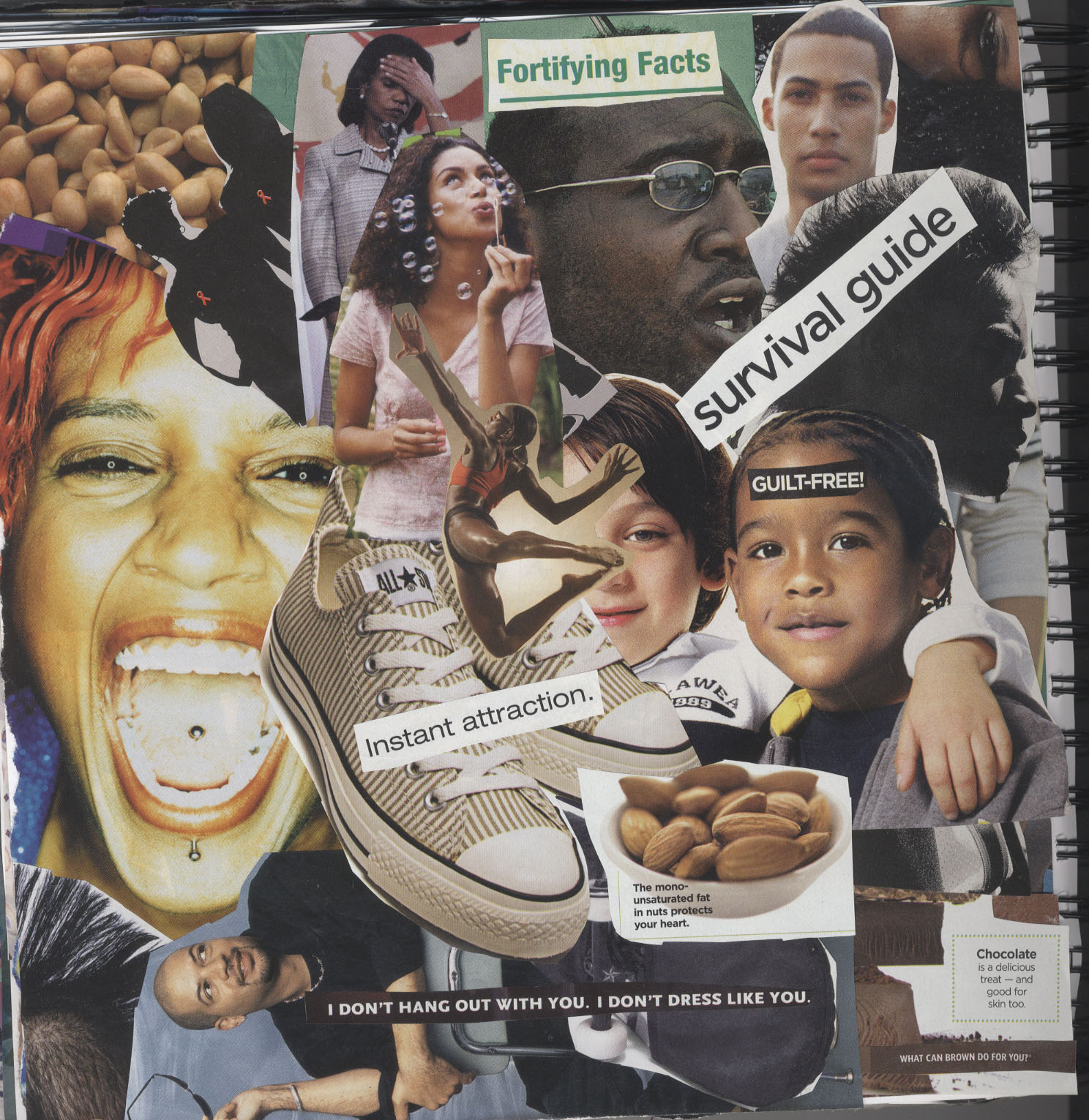
YOUR PROBLEM 2007
So it was an experiment. 11 Duke University students and a double-blind BrokenBeautiful Press agent disguised as a professor simmered for 3 months in a classroom (and on a bus...and in a dining hall) and this is what happen. Brokenbeautiful Press is proud to introduce you to variety of inventive publications, teaching tools, interactive webspaces and upcoming events created by and with the members of the To Be A Problem: Outcast Subjectivity and Black Literary Production class at Duke University. And now it's your problem.
Work it Out

This workbook was created by the members of the To Be A Problem ENG26 Class at Duke University in Fall 2007. The students explain:
We came together as a class to create this workbook to express our views about black issues, a topic your department focuses on. The classroom theme heightens the effect of our goal, being an appropriate and natural setting where people from diverse backgrounds interact and grow together. We ask that you please support us by sharing this collaborative work of art with your students, fellow faculty members, and any one else you feel would benefit from this. We desire that our example of working together and successfully producing this workbook may inspire others to mobilize and demonstrate their own beliefs and issues they deem important. Silence doesn't benefit anyone. Thank you for taking the time to read this and we hope you continue reading our workbook and help us distribute.
Click here to download your free copy!

The Watermelanin Remix
This zine is a compilation of student poems and prose pieces in conversation with Paul Beatty's The White Boy Shuffle. Remixing the poems in main character Gunnar Kaufman's poetry collection Watermelanin, the students examined their own relationships to racism, gender, family, class, oppression and freedom. This edition also includes literary readings of each poem by fellow students and photos of the poets performing their pieces for an unsuspecting audience of bus-riders. This zine is highly recommended as a teaching tool for any class reading Beatty's important work.
Click here to download your free copy!
Fresh Zines

S.exual E.xperience X.posed is a zine compiled by Chantel Ligget that reveals a diverse array of explicit sexual experiences from the point of view of women and women-identified individuals. Use this zine in your women's organizations to practice the bravery of sexual self-disclosure.

Such a F**king Problem is a poetry zine by POMK, founder of the blog collective of the same name (see suchafuckingproblem.blogspot.com). This zine uses irony and rage to disrupt assimilation and the blame-the-victim tendency in our society. Read and respond!

Double Consciousness is a poetry zine envisioned and created by Michelle Oyeka with contributions from Elisabeth Michel and Stephanie Darand, using W.E.B. DuBoises 1903 concept of "double consciouness" to examine the art of looking at the present from multiple perspectives.

Infection Confirmed is a 'zine compiled by aspiring medical students of color, seeking to examine inequalities in the healthcare system.
Black Leaders: Misleading the Black Community is a zine by Jade Miller critiquing the actions and inactions of conservative black leaders and drawing on models from Aaron McGruder to Barack Obama to imagine what effective black leadership might look like.
Bold and Beautiful Blogs

Room and Bored: Political Engagement By and For College Students
R&B creator Amanda Turner says: "Even while we young adults pursue our individual goals at institutions across the country it’s important that we remain socially conscious. From politics, education, and current events, to important organizations and programs that concern young people – if it impacts college students I’ll talk about it here. Use R&B to start thinking about the world around you and how to better it now."
Such a F**king Problem: Conflict as a Point for Conversation
This site is an experiment in the possibility of self-expression without the safety of norms. Created by a decidedly UN-likeminded team of bloggers led by POMK, this site even has a space for you to deposit your ignorance! The perfectly imperfect place to practice your bravery. Start now!
New Features:
Check back in January for two related films by Christine Hunt and Stephanie Darand. Hunt's film explores the views of different generations of black women in one family discussing images of black women in the mass media and Darand's film asksmembers of a black student theater collective to think about the role of theater in perpetuating or breaking down stereotypes.
Also check back for tracks produced by Mike Posner and featuring lyricist Pat about hip hop bringing people together!
Upcoming Events:
AND in January, Yessenia Castillo will be hosting a special screening of Aishah Simmon's acclaimed film NO! Rape in the African American Community
and Elisabeth Michel will be coordinating a Haitian arts celebration to raise funds for Hand to Hand, an organization that sponsors education for Haitian children.
Try this one at home:
Inspired by Mendi and Keith Obadike's cyber-installation "Wishful Thinking/My Hands" (www.blacknetart.com) and the locally created Wishes Fulfilled
the members of the To Be A Problem class created their own wishlists in honor of people they love and admire which they are now distributing to their loved ones in this form:
 .
.This was our assignment: After reading Mendi Obadike's my hands/wishful thinking http://obadike.tripod.com/Adiallo2.html and my poem "wishful thinking" http://brokenbeautiful.wordpress.com/tag/in-praise-of-blackwomanhood/
create your own wish list. Mendi's piece was created in response to the police murder of Amadou Diallo and my piece was inspired by her's and created in response to the treatment of black women in Durham during and after the Duke Lacrosse Rape Case. Following the form of these two pieces dedicate your wishes to an individual or group of people (let us know who it is dedicated to) and address your audience in the second person form (i.e. "YOU are powerful" "YOU brave bridges daily") as if your wishes for them were already true.
For example, this is a wishlist that Janeria Pullen created for her family and the city of Trenton, NJ:
Wish List for My Family and My City
1. You are free from all constraints, nothing stands in your way; not ignorance, not sickness. You are boundless.
2. I am no longer considered the one who made it in spite of you; we all know I made it because of you.
3. Your men are strong, powerful, and wise; they choose their own paths.
4. Your women are strong, wise, and loved for their beauty; they also choose their own paths.
5. Your men and women work together; you love and would do anything for each other.
6. Your children can play outside without the fear of losing their lives.
7. Your young men don’t have to form a new family to feel love; for love is abundant and overflowing.
8. Your young women know their worth; they carry themselves like the queens that they truly are.
9. Your family structure has been restored.
10. What’s yours is yours, and yours to share; no one has to take anything from anyone.
11. Your streets have long since forgotten the scent of blood.
12. Your schools are successful, and the press leads the city in praises. Everyone graduates with honors.
13. The bridge now speaks the truth. The world really does take what Trenton makes.
14. When people leave, they cannot wait to return. Everyone gives back to the community.
15. You have all let go of your dirty habits. All of the bars and liquor stores have closed; cigarettes don’t cross into the city limits.
16. Unemployment is a faint memory. We’ve almost forgotten what these words mean.
17. The state prison has been moved. There is no need for a prison in a prisoner-less city.
18. The gangs have laid there flags to rest.
19. We are all one big happy family.
Email brokenbeautifulpress@gmail.com with the word "wish" in our subject line to add your wishes to our growing online installation.
Sunday, December 02, 2007
Asanas for Megan Williams
i am trying to think about the intentional process of invisibility around the violence acted against Megan Williams. i am still trying to wrap my brain and my heart around this case and what our collective responses could be.
i am trying to think about how trauma stifles my ability to respond to acts of violence in my community and around the world. is it that my trauma stops me from acting when i see other black women traumatized? what do we do next? is it these historical traumas that some how shift my body back to a time when i could not say anything, or bear the same trauma my sista experienced, or worse? is choosing not to act against our historical or contemporary trauma a mechanism for keeping our safe, in some way?
i am trying to think about how i can take back my body from trauma. what does an embodied resistance look like? perhaps, it looks like a body, full of light, harnessing her strength, and refusing to be frozen by trauma. perhaps, it is a body who refuses to have her tongue tied by fear. maybe embodied resistance is a heart that refuses to stop beating, that refuses to have the love pressed out of it.
embodied resistance, could be black women free from heart disease, diabetes, womb disease, mental disease. embodied resistance could be black women freeing their bodies from food, cultural pressures, drugs, alcohol, social pressures... as i write this i am sure embodied resistance is all of these acts and more.
i am trying to think about how to process this trauma against our sista megan williams in an intimate, real, transformative way. i am looking to find a way for individuals to actively participate in a healing movement for Megan Williams no matter whereever they are. here is a call to action for anyone interested in sharing healing evergy with our sista. you don't have to march, protest, write a letter. you don't have to leave your dorm room, you warm living room, you can even do it on the train, at a stop light, on the bus.
i am asking for everyone who reads this post to dedicate one minute of yogic practice, meditation, or breath work to Megan Williams. if you are not a yoga person to do one or two stretches for her. if you are advanced do a head stand or full lotus position for her. take a moment or two out of your day to breath deeply, complete some fire breaths, or kemetic breaths for Megan Williams.
as you are doing this, think about her healing, send out some well wishes for her, her family and our collective healing.
our collective action will shift the energy around this case. we will not be immobilized by trauma.
our embodied resistance is movement is breath meditation is the quest for our collective health and well-being
here is a poem for encouragement
i am a daughter of ntozake
of june of audre of nikki
of sonia of gwendolyn of jayne
of asha of lucille of rhodessa of anna
of ruth of elizabeth of toi of marilyn
of nina of cassandra of ella of fannie
of rosa of nayo of bernice of anjail of aretha
of toni of sapphire of ai of betty of pearl of bertha
of of of of of ofoofffffof fofofff
our collective heat is a back bend that strenghthens our walk
our collective heat is a visualization that wraps us in warmth
our collective heat is a moon salutation that greets the night
our collective heat is slow and concentrated breath deep in the diaphragm
our collective heat is heat is heat supple and pulsing and balancing the universe
peace,
e
furiousflower@gmail.com
i am trying to think about the intentional process of invisibility around the violence acted against Megan Williams. i am still trying to wrap my brain and my heart around this case and what our collective responses could be.
i am trying to think about how trauma stifles my ability to respond to acts of violence in my community and around the world. is it that my trauma stops me from acting when i see other black women traumatized? what do we do next? is it these historical traumas that some how shift my body back to a time when i could not say anything, or bear the same trauma my sista experienced, or worse? is choosing not to act against our historical or contemporary trauma a mechanism for keeping our safe, in some way?
i am trying to think about how i can take back my body from trauma. what does an embodied resistance look like? perhaps, it looks like a body, full of light, harnessing her strength, and refusing to be frozen by trauma. perhaps, it is a body who refuses to have her tongue tied by fear. maybe embodied resistance is a heart that refuses to stop beating, that refuses to have the love pressed out of it.
embodied resistance, could be black women free from heart disease, diabetes, womb disease, mental disease. embodied resistance could be black women freeing their bodies from food, cultural pressures, drugs, alcohol, social pressures... as i write this i am sure embodied resistance is all of these acts and more.
i am trying to think about how to process this trauma against our sista megan williams in an intimate, real, transformative way. i am looking to find a way for individuals to actively participate in a healing movement for Megan Williams no matter whereever they are. here is a call to action for anyone interested in sharing healing evergy with our sista. you don't have to march, protest, write a letter. you don't have to leave your dorm room, you warm living room, you can even do it on the train, at a stop light, on the bus.
i am asking for everyone who reads this post to dedicate one minute of yogic practice, meditation, or breath work to Megan Williams. if you are not a yoga person to do one or two stretches for her. if you are advanced do a head stand or full lotus position for her. take a moment or two out of your day to breath deeply, complete some fire breaths, or kemetic breaths for Megan Williams.
as you are doing this, think about her healing, send out some well wishes for her, her family and our collective healing.
our collective action will shift the energy around this case. we will not be immobilized by trauma.
our embodied resistance is movement is breath meditation is the quest for our collective health and well-being
here is a poem for encouragement
i am a daughter of ntozake
of june of audre of nikki
of sonia of gwendolyn of jayne
of asha of lucille of rhodessa of anna
of ruth of elizabeth of toi of marilyn
of nina of cassandra of ella of fannie
of rosa of nayo of bernice of anjail of aretha
of toni of sapphire of ai of betty of pearl of bertha
of of of of of ofoofffffof fofofff
our collective heat is a back bend that strenghthens our walk
our collective heat is a visualization that wraps us in warmth
our collective heat is a moon salutation that greets the night
our collective heat is slow and concentrated breath deep in the diaphragm
our collective heat is heat is heat supple and pulsing and balancing the universe
peace,
e
furiousflower@gmail.com
Tuesday, November 27, 2007
That's Right

Manju sent this article. These sistas have just replaced Batman as my favorite superhero. Sooo fierce.
India's 'pink' vigilante women
India's 'pink' vigilante women
| By Soutik Biswas BBC News, Banda |
They wear pink saris and go after corrupt officials and boorish men with sticks and axes.
The several hundred vigilante women of India's northern Uttar Pradesh state's Banda area proudly call themselves the "gulabi gang" (pink gang), striking fear in the hearts of wrongdoers and earning the grudging respect of officials.
The pink women of Banda shun political parties and NGOs because, in the words of their feisty leader, Sampat Pal Devi, "they are always looking for kickbacks when they offer to fund us".
Two years after they gave themselves a name and an attire, the women in pink have thrashed men who have abandoned or beaten their wives and unearthed corruption in the distribution of grain to the poor.
They have also stormed a police station and attacked a policeman after they took in an untouchable man and refused to register a case.
Poorest
"Nobody comes to our help in these parts. The officials and the police are corrupt and anti-poor. So sometimes we have to take the law in our hands. At other times, we prefer to shame the wrongdoers," says Sampat Pal Devi, between teaching a "gang" member on how to use a lathi (traditional Indian stick) in self defence.
| | We are a gang for justice Sampat Pal Devi |
Banda is at the heart of the blighted region that is Bundelkhand, one of the poorest parts of one of India's most populous states.
It is among the poorest 200 districts in India which were first targeted for the federal government's massive jobs-for-work programme. Over 20% of its 1.6 million people living in 600 villages are lower castes or untouchables. Drought has parched its already arid, single-crop lands.
To make matters worse, women bear the brunt of poverty and discrimination in Banda's highly caste-ridden, feudalistic and male dominated society. Dowry demands and domestic and sexual violence are common.
Locals say it is not surprising that a women's vigilante group has sprung up in this landscape of poverty, discrimination and chauvinism.
Sampat Pal Devi is a wiry woman, wife of an ice cream vendor, mother of five children, and a former government health worker who set up and leads the "pink gang".
"Mind you," she says, "we are not a gang in the usual sense of the term. We are a gang for justice."
'Uproot the corrupt'
Her seeds of rebellion were sown very early on when in face of her parents' resistance to send her to school, she began writing and drawing on the walls, floors and dust-caked village streets.
She finally ended up going to school, but was married off when she was nine in a region where child marriages are common. At 12, she went to live with her husband and at 13 she had her first child.
To keep the home fires burning, Sampat Devi began to work as a government health worker, but she quit after a while because her job was not satisfying enough.
"I wanted to work for the people, not for myself alone. I was already holding meetings with people, networking with women who were ready to fight for a cause, and was ready with a group of women two years ago," she says.
Sitting outside a home in Attara, Sampat Devi waves her calloused hands, breaks into a rousing song to "uproot the corrupt and be self reliant", and animatedly talks to women - and men - who flock to her with their problems.
A mother brings in her weeping daughter who has been thrown out by her husband demanding 20,000 rupees from her parents.
"He married me for the love of money," sobs Malti.
Sampat Devi tells her "gang" that they will soon march to the girl's house and demand an explanation from the husband. "If they don't take her back and keep her well, we will resort to other measures," she says.
'No handouts'
The pink sorority is not exactly a group of male-bashing feminists - they claim they have returned 11 girls who were thrown out of their homes to their spouses because "women need men to live with".
That is also why men like Jai Prakash Shivhari join the "gulabi" gang and talk with remarkable passion about child marriages, dowry deaths, depleting water resources, farm subsidies and how funds are being stolen in government projects.
"We don't want donations or handouts. We don't want appeasement or affirmative action. Give us work, pay us proper wages and restore our dignity," he says.
The women in the "gulabi gang" echo the same sentiment - but Sampat Devi has a separate agenda for women.
"Village society in India is loaded against women. It refuses to educate them, marries them off too early, barters them for money. Village women need to study and become independent to sort it out themselves," she says.
Where do the pink women go from here?
They already claim to have done some work in combating crime and corruption in the area. Last year, Sampat Devi contested the state polls as an independent candidate and mustered only 2,800 votes.
"Joining politics is not my chosen way to help people. We will keep up our good work, so the state does not take us for granted," she says.
In the badlands of Uttar Pradesh where nothing seems to work for the poor, this itself is a laudable aim.
Saturday, November 24, 2007
Calling Black Women for Ethnographic Performance Process
Calling Black Women for Ethnographic Performance Process
Greetings people,
It is that time. I have been in a bit of hibernation while I was cooking up a way to get you involved with a so fresh and so necessary improvisational, sista-circle, healing, performance opportunity.
I am Ebony Golden currently living in Manhattan and attending NYU. I call a few places home, most recently Durham, NC. While living in Durham I had the opportunity to study with and make trouble with some of the flyest sistas around. We made art with the people and shared it with the people. We healed ourselves everyday!
I would not be here at NYU right now if it wasn't for them. I am dedicating this process and this year at NYU to them: Mama Nia, Mama Asantewa, Mama Nayo, Mama Nana, Mama Jaki, Mama-Dr. Ahmad, Mama Pearl, Mama Dimples, Mama Theresa, Sista Kim Arrington, Sista Zachari, Sista Alexis Pauline Gumbs, Sista Jurina, Sista Alisha Gaines, Sista Serena, Sista Kriti, Sista Kai, Sista Shirlette, Sista Emily, Sista Kriti, Sista Kia/Mercedes, Sista Liz, Sista Amaris, Sista Namira, Sista Raina, Sista DeLana, Sista Nikki, Sista Alfreda, Sista Vikki, Sista Michelle, Sista Afyia, Sista Zelda, Sista Dannette, Sista Inga, Sista SimaFlower, Sista Paulette, Sista Manju
This process is in your honor along with my sistas from DC, TX, and in other spaces. You hold me up, thank you.
I am currently facilitating a performance project for Black women as a part of my Master's Thesis in Performance Studies based on black women's processes of healing from trauma, particularly historical and generational trauma. So how are your healing practices different from your mother's? How are they similar?
I am dedicated to my healing, the healing of the women in my family and extended family, and the world. This is a process we are creating everywhere, let's continue to tap in together and see what shifts.
This process that will have a few opportunities for performance, live and virtual, but mostly i am interested in articulating a poetics of womanist performance process and methodology that can be reproduced by us every where to heal ourselves and this world.
NEED
I need you to tell our story. A small group of sistas who are not afraid to undertake this work with me, whether they understand exactly where it is headed or not. Sistas who enjoy movement, music, writing, photography, people, good food, performing, making a fuss about us (black women), and who are not afraid to say we (black women) matter anywhere in this world.
NEEDS
1. 5-6 sistas to perform several times next semester
2. videographer/ photographer/ editor
3. choreographer
4. producer
5. stage manager
6. 'zine designer
7. web designer
NEEDS
1. voice recorders, tapes
2. gift cards (Target would be excellent)
3. performance space
4. video recorders, tapes, dvd
5. money, frequent flyer miles, train tickets, gas cards!!!
NEEDS
Your stories. Some of you are far away from me right now. But I would love to interview you about you and your healing process. Let's set up some time for phone interviews. I will be in TEXAS in December and NC in January so we can get together.
Every one is invited to NYC in May 08 to see a pivotal step in this journey. Can't wait.
oh and check out some of these sites to get an idea of what sistas are doing to inspire me: http://www.thatlittleblackbook.blogspot.com/, http://talitharise.blogspot.com/, http://bettertospeak.blogspot.com/, www.goldendharma.blogspot.com, http://atthekitchentable.blogspot.com/, http://brokenbeautiful.wordpress.com/, http://sweating-it.blogspot.com/,
Email me if you are interested!
Ebony Golden, MFA
Betty's Daughter Arts Collaborative, Director
furiousflower@gmail.com
Calling Black Women for Ethnographic Performance Process
Greetings people,
It is that time. I have been in a bit of hibernation while I was cooking up a way to get you involved with a so fresh and so necessary improvisational, sista-circle, healing, performance opportunity.
I am Ebony Golden currently living in Manhattan and attending NYU. I call a few places home, most recently Durham, NC. While living in Durham I had the opportunity to study with and make trouble with some of the flyest sistas around. We made art with the people and shared it with the people. We healed ourselves everyday!
I would not be here at NYU right now if it wasn't for them. I am dedicating this process and this year at NYU to them: Mama Nia, Mama Asantewa, Mama Nayo, Mama Nana, Mama Jaki, Mama-Dr. Ahmad, Mama Pearl, Mama Dimples, Mama Theresa, Sista Kim Arrington, Sista Zachari, Sista Alexis Pauline Gumbs, Sista Jurina, Sista Alisha Gaines, Sista Serena, Sista Kriti, Sista Kai, Sista Shirlette, Sista Emily, Sista Kriti, Sista Kia/Mercedes, Sista Liz, Sista Amaris, Sista Namira, Sista Raina, Sista DeLana, Sista Nikki, Sista Alfreda, Sista Vikki, Sista Michelle, Sista Afyia, Sista Zelda, Sista Dannette, Sista Inga, Sista SimaFlower, Sista Paulette, Sista Manju
This process is in your honor along with my sistas from DC, TX, and in other spaces. You hold me up, thank you.
I am currently facilitating a performance project for Black women as a part of my Master's Thesis in Performance Studies based on black women's processes of healing from trauma, particularly historical and generational trauma. So how are your healing practices different from your mother's? How are they similar?
I am dedicated to my healing, the healing of the women in my family and extended family, and the world. This is a process we are creating everywhere, let's continue to tap in together and see what shifts.
This process that will have a few opportunities for performance, live and virtual, but mostly i am interested in articulating a poetics of womanist performance process and methodology that can be reproduced by us every where to heal ourselves and this world.
NEED
I need you to tell our story. A small group of sistas who are not afraid to undertake this work with me, whether they understand exactly where it is headed or not. Sistas who enjoy movement, music, writing, photography, people, good food, performing, making a fuss about us (black women), and who are not afraid to say we (black women) matter anywhere in this world.
NEEDS
1. 5-6 sistas to perform several times next semester
2. videographer/ photographer/ editor
3. choreographer
4. producer
5. stage manager
6. 'zine designer
7. web designer
NEEDS
1. voice recorders, tapes
2. gift cards (Target would be excellent)
3. performance space
4. video recorders, tapes, dvd
5. money, frequent flyer miles, train tickets, gas cards!!!
NEEDS
Your stories. Some of you are far away from me right now. But I would love to interview you about you and your healing process. Let's set up some time for phone interviews. I will be in TEXAS in December and NC in January so we can get together.
Every one is invited to NYC in May 08 to see a pivotal step in this journey. Can't wait.
oh and check out some of these sites to get an idea of what sistas are doing to inspire me: http://www.thatlittleblackbook.blogspot.com/, http://talitharise.blogspot.com/, http://bettertospeak.blogspot.com/, www.goldendharma.blogspot.com, http://atthekitchentable.blogspot.com/, http://brokenbeautiful.wordpress.com/, http://sweating-it.blogspot.com/,
Email me if you are interested!
Ebony Golden, MFA
Betty's Daughter Arts Collaborative, Director
furiousflower@gmail.com
Wednesday, October 31, 2007
To Be Re(a)d

www.documentthesilence.wordpress.com
Today, Wednesday October 31st 2007, women of color and allies around the country are wearing red as part of a collective healing and revealing process in response to sexual violence against women of color. This collective red is meant to be antidote to shame, a warning sign to those would continue to blame women of color for the outrageous abuses that our society condones against us. This collective red is meant to fill in the missing frame of the black and white of Jena. This red is an invocation of gendered wounds and demands that we remember what Ida B. Wells told us, which is that the lynching of black men and women and the rape of black women and men are twin tools of the same repression. And blood is red.
In 1973, when Toni Morrison published her second novel Sula, she changed black feminist literary criticism forever. In fact, I like to day that black feminists created black feminist literary criticism to deal with Sula, the character and the text. In partnership with her first novel The Bluest Eye, Morrison's Sula does more than insert black female characters into a literary scene that had ignored and caricaturized them. With these two novels Morrison insists that the very form of the novel must bend and bow and breathe and move to witness the experiences of black women and girls. The Bluest Eye could have been the first contemporary black female bildungsroman (coming of age story), except that Pecola, the main character (but not necessarily the protagonist) never grows up. Incestuous rape and violent racism shatter anything that would dare look like growth in that novel. Even the flowers. One could argue that in The Bluest Eye white supremacy (in the voice of the falling apart Dick and Jane reading primers) is the protagonist, and Pecola herself is the antagonist, criminalized for a small attempt at existence and vanguished by the pervasive triumph of racism, as patriarchalism, as capitalism and the death of a soul, the splitting of a mind. The Bluest Eye is Morrison's first major study of what it means to be re(a)d. What happens when we are excluded from the very language we learn to read in? What are the dreadful consequences of an agreed upon social reading of black girls that spells us "worthless"?
Sula could have been the first contemporary black female bildungsroman, except that whereas The Bluest Eye leaves the main character with a split mind, witnessed by the black girls who survive, Sula is an intersubjective novel with two protagonists that cannot exist without each other, Sula and Nel grow apart, but the love between girls is the miracle, hope and home of this novel (a theme Morrison will return to in her most recent novel Love).
Sula arrived well placed in time to become the catalyst that it was and is for black feminist literary criticism. The book was published right when the first black women's lit courses were being taught in newly formed Black Studies and Women's Studies programs in colleges in the NorthEast. The two foundational texts of black feminist literary studies, Mae Gwendolyn Henderson's "Speaking in Tongues: Dialogics, Dialectics and the Black Women Writer's Literary Tradition" and Barbara Smiths "Towards a Black Feminist Criticism" both read Sula as their primary text and as an instance through which to imagine what black feminist literary criticism could be. Even though Morrison wouldn't achieve national recognition until she "manned" up...or won the National Book of the Month Club selection for Song of Solomon (a radical and beautiful and rich book in it's own rite), Sula was the book black feminists clung to. Audre Lorde mentions in an interview that she doesn't care that it was Song of Solomon that Morrison won the award for...it is Sula that "lit me up like a Christmas tree".
And indeed one of the topics we can discuss is why Morrison gained national recognition once she wrote a novel that centered around a black man. It might be helpful to realize that when Morrison won the National Book of the Month Club selection she became the first African-American writer since Richard Wright to do so.
The passages that cause black feminists to canonize Sula are the passages about mutual self invention that occur between Sula and Nel. The most cited passage is the one where the narrator explains the destined friendship of the two girls noting that "having long ago realized they were neither white nor male...they went about creating something else to be." This is a proposition as far reaching as to appear in Afro-Scottish Maud Sulter's description of a art exhibit she curated in England and as long lasting as to reappear as the "different sort of subject" that Hortense Spillers asks for in her 1987 essay "Mama's Baby, Papa's Maybe". The two other moments of the text that black feminists theorists drew in the sky are Sula's insistence when her grandmother suggests she should settle down and have some babies that "I don't want to make someone else. I want to make myself." This challenge to motherhood completes the critique of heteropatriarchy that allows Barbara Smith to claim Sula as a "lesbian" text alongside the books final revelation that the loss of a husband is nothing compared with the loss of a girl friend. And the book ends with the word that has framed all of my days. Girl, girl, girl, girl, girl.
Spiraling out into this moment, the desperation in that one word, girl speaks the prayer to the only thing that I believe can save us, and that is the love between women and girls of color that fills us with the bravery to make a new world language. When the Irish boys in the novel attempt to attack Nel and Sula, with designs on sexual abuse, Sula cuts of the tip of her finger...shifting the boys' reading of her from prey to predator. Re(a)d is the color of threat. Is the color of blood, of nothing to lose, of everything born to be remade.
So today as I dress myself in re(a)d on behalf of my sisters and my own survival take me as a sign.
Wednesday, October 24, 2007
CALL OUT: Community Responses to Sexual Assault
Or as June Jordan says.....:when will we seize the whole world with our freedom?"
Yes, I'm calling you out.
love,
lex
---------- Forwarded message ----------
Subject: CALL OUT: INTERNATIONAL DAY OF ACTION FOR
COMMUNITY RESPONSES TO SEXUAL ASSAULT
To: undisclosed-recipients
hi all. this is a proposal for an international day of action. its
exciting. lets talk about what we can do in all of our cities, and the
connections we have overseas. how can we make this a big thing? if you
have information or articles to go on the blog, please email them through
to the address below. if you have ideas, you can email them too! or have a
meeting and organise some stuff.
we understand that maybe the date will be around elections, but this can
tie into that in so many ways - our government doesnt give a shit about
sexual assault. i was reading cosmo the other day and there was an
interview with john howard and he said he was dealing with sexual assault
and domestic violence by reducing unemployment with things like
workchoices. amazing. and the northern territory
intervention/invasion/occupation is a really huge thing that is going on
in australia right now, and is really fucked, and is tied up into these
discourses around sexual assault. this is a really important way to show
solidarity with indigenous communities, but also to acknowledge that we in
all of our communities need to be dealing with this stuff. assault is not
an indigenous issue - it is all of our issue.
PLEASE FORWARD
INTERNATIONAL DAY OF ACTION
For Community Responses to Sexual Assault
November 30th 2007
We are calling for people to organise in their own towns and cities to
take action on this day. This means whatever it means to you – maybe
organising in your school, occupying an office or a court or a police
station, holding a rally, making a publication, talking to people, or
anything you can think of.
The government has used sexual assault to justify the military invasion,
removal of land permits, and denial of Indigenous autonomy in the Northern
Territory. But this is not a way of dealing with sexual assault – fear,
intimidation, and military and police presence as a "solution" shows no
understanding of sexual assault or ways of dealing with it. The police
and military have been perpetrators of sexual assault in communities
around Australia, in Iraq, around the world.
The Northern Territory intervention is a racist intervention. It is
ridiculous that our white government thinks that Indigenous communities
are unable to respond to sexual assault themselves, with their own
processes and understandings, especially when we look at the way sexual
assault is dealt with across the rest of Australia, by relying on an
alienating, adversary and difficult to access legal system.
Almost no sexual assaults are reported to police, and most reported cases
result in no conviction. This is not because they are "false claims" but
because the legal system forces someone who has been assaulted to try to
"prove" their claim, doubting them, disbelieving, pressuring them to
relive their assault and undergo invasive medical examinations. Most
assault happens in private – it makes it the survivor's word against the
perpetrator's. The court system is designed so that survivors of sexual
assault are attacked and broken by defence lawyers who only want to win
their case. In the rare case that a perpetrator is convicted, prison does
nothing to confront and challenge the behaviour and underlying assumptions
and understandings that foster a culture of sexual assault.
We want a day of action calling for community – not military, not legal –
responses to sexual assault. Our government shows no interest in trying to
engage with the real issues of sexual assault and how to confront it, so
we need to do it ourselves. We are calling for support for survivors of
sexual assault, and a process of community response that prioritises their
needs and safety. We are calling for processes that try to change the
underlying myths and power dynamics that lead to assault, before it
happens. We want processes that deal with perpetrators in a way that
challenges their beliefs and behaviours, and gets them to take
responsibility for their actions and trying to change.
For more information, or to add your own:
communitiesresponsetosexualassault.wordpress.com
Email: ida_2007@graffiti.net
Other links for info on community response, the Northern Territory
intervention, etc:
www.worldwithout.org
theoryoftheoffensive.blogsome.com
Yes, I'm calling you out.
love,
lex
---------- Forwarded message ----------
Subject: CALL OUT: INTERNATIONAL DAY OF ACTION FOR
COMMUNITY RESPONSES TO SEXUAL ASSAULT
To: undisclosed-recipients
hi all. this is a proposal for an international day of action. its
exciting. lets talk about what we can do in all of our cities, and the
connections we have overseas. how can we make this a big thing? if you
have information or articles to go on the blog, please email them through
to the address below. if you have ideas, you can email them too! or have a
meeting and organise some stuff.
we understand that maybe the date will be around elections, but this can
tie into that in so many ways - our government doesnt give a shit about
sexual assault. i was reading cosmo the other day and there was an
interview with john howard and he said he was dealing with sexual assault
and domestic violence by reducing unemployment with things like
workchoices. amazing. and the northern territory
intervention/invasion/occupation is a really huge thing that is going on
in australia right now, and is really fucked, and is tied up into these
discourses around sexual assault. this is a really important way to show
solidarity with indigenous communities, but also to acknowledge that we in
all of our communities need to be dealing with this stuff. assault is not
an indigenous issue - it is all of our issue.
PLEASE FORWARD
INTERNATIONAL DAY OF ACTION
For Community Responses to Sexual Assault
November 30th 2007
We are calling for people to organise in their own towns and cities to
take action on this day. This means whatever it means to you – maybe
organising in your school, occupying an office or a court or a police
station, holding a rally, making a publication, talking to people, or
anything you can think of.
The government has used sexual assault to justify the military invasion,
removal of land permits, and denial of Indigenous autonomy in the Northern
Territory. But this is not a way of dealing with sexual assault – fear,
intimidation, and military and police presence as a "solution" shows no
understanding of sexual assault or ways of dealing with it. The police
and military have been perpetrators of sexual assault in communities
around Australia, in Iraq, around the world.
The Northern Territory intervention is a racist intervention. It is
ridiculous that our white government thinks that Indigenous communities
are unable to respond to sexual assault themselves, with their own
processes and understandings, especially when we look at the way sexual
assault is dealt with across the rest of Australia, by relying on an
alienating, adversary and difficult to access legal system.
Almost no sexual assaults are reported to police, and most reported cases
result in no conviction. This is not because they are "false claims" but
because the legal system forces someone who has been assaulted to try to
"prove" their claim, doubting them, disbelieving, pressuring them to
relive their assault and undergo invasive medical examinations. Most
assault happens in private – it makes it the survivor's word against the
perpetrator's. The court system is designed so that survivors of sexual
assault are attacked and broken by defence lawyers who only want to win
their case. In the rare case that a perpetrator is convicted, prison does
nothing to confront and challenge the behaviour and underlying assumptions
and understandings that foster a culture of sexual assault.
We want a day of action calling for community – not military, not legal –
responses to sexual assault. Our government shows no interest in trying to
engage with the real issues of sexual assault and how to confront it, so
we need to do it ourselves. We are calling for support for survivors of
sexual assault, and a process of community response that prioritises their
needs and safety. We are calling for processes that try to change the
underlying myths and power dynamics that lead to assault, before it
happens. We want processes that deal with perpetrators in a way that
challenges their beliefs and behaviours, and gets them to take
responsibility for their actions and trying to change.
For more information, or to add your own:
communitiesresponsetosexualassault.wordpress.com
Email: ida_2007@graffiti.net
Other links for info on community response, the Northern Territory
intervention, etc:
www.worldwithout.org
theoryoftheoffensive.blogsome.com
Thursday, September 27, 2007
Without You Who Understand
Two loved ones of mine have had their names added to the long list of victims of the New York Police Department’s everyday every night brutality. And every time this happens it is an assault against my people, whoever they are. People of color, queer people, young people, transgendered people, activists, sex workers, immigrants. Every time this happens is my people locked away.
But these two. These are really my people. This is who I have cried with after break-ups, eaten ice cream with when I should have been studying, this is who sat with me in limbo every semester, unregistered and undocumented because no one believed we’d be able to keep paying for school, least of all us. This is who brought me lemonade and sandwiches when couldn’t get out of bed and couldn’t say why, and most importantly these are the people who stayed up all night with me too many times to count, like Pinky and the Brain in pumas with wild hair, plotting and believing in another world. Projecting and practicing freedom. These are the ones who said, yes, we can build that. And we should paint it purple, not blue. And if someone had been tracing our hands as we punctuated every detail about what playgrounds to make out of the rubble of prisons, what mosaics to glue to the empty US mint...if you had been tracing our hands you would have seen that we were spelling blood and water and water and blood. This is what I mean when I say, these are my people.
They are the ones I have trusted to hold my youth and to hand it back to me with a firm nudge if I ever consider selling out. These are the ones I have trusted to sell their vintage sneakers and stolen accessories to hire a lawyer when the state finally notices. We have agreed that this is a morally and strategically better than actually letting each other become lawyers. So these are the ones I trust to break me out of prison, to never forget where I am. To prove the lie of the state when it says no one loves you, you little black girl. You are nothing. No one cares where you are right now. And they have trusted me too, to pawn, to plead, to risk, to witness, to remember. I have agreed to the same.
But I didn’t think it would be today.
As I write this, my people are locked down for keeping their part of the agreement. After months of planning a fundraiser for the Sylvia Rivera Liberation Project my people were ready to celebrate. After gathering queer and trans people of color and allies from all over the tri-state area my people, these two, deserved the peace of bass and the release of rhythm. Late Wednesday night, like every night, my people were dancing. But late Wednesday night, like every night, the state was on the prowl. And right in front of the bright loud colors, right in front of the opening sounds (you see my people dress like confetti parades, my people move like new memories) the NYPD was doing the state, forcing the power of one black man into a space to small for dignity. And my people, though practicing the celebration, though air traffic hailing the future, this night, my people do not forget the moment. This is why my people wear sneakers and flat shoes. They remember what we agreed. So early Thursday morning they stopped the dancing to witness this arrest, one of millions of arrests, (these too my people). And they said with their eyes what we promised we would say. They said
We see you. We remember what you deserve. And when the lie come out that you are not human, that who you are does not matter, we will stand up that moment with the truth. We see you.
And the policemen could not tell who they addressed with their eyes, from the reasonable distance of the sidewalk. The policemen did not know if by “you” their brown eyes meant the person in the handcuffs or the one clanking them shut. So while their brightly clad feet and their hair awake with dancing did not get in anyone’s way, the policemen found their gazes too wide and too loud. So the policemen grabbed them. And closed their own eyes.
These two. My people. And shoved them in the car without warning.
And what I got then was a 2am text message indecipherable and cut short. And 12 hours later an email. They have not been charged. They have not been arraigned.
Because there is no such crime as love in excess. There is no such crime as too bright for 1984. There is no crime called smarter and braver than what day it is. There is no such crime as wanting more.
But they have not been released yet either. Because to place your soul firmly against the blunt edge of lawfulness is to share terror on measured and socialist terms. And police officers cannot afford to remember the neighborhoods they come from and who is now missing, lest their hearts beat and break against the tight armor of the state. And dreamers cannot afford fancy lawyers. So what I got then was a 2 am text message, and 12 hours later an email.
And what I have now is a promise to keep.
IMMEDIATE RELEASE
Contacts:
Jack Aponte (jack@srlp.org, 347-247-1526)
Naomi Clark ( naomi@srlp.org, 917-907-4870)
Police Brutality Strikes Fifth Anniversary of Sylvia Rivera Law Project
NEW YORK - On the night of Wednesday, September 26, officers from the
9th Precinct of the New York Police Department attacked without
provocation members of the Sylvia Rivera Law Project and of its
community. Two of our community members were violently arrested, and
others were pepper sprayed in the face without warning or cause.
The Sylvia Rivera Law Project ( www.srlp.org ) is an organization that
works on behalf of low-income people of color who are transgender,
gender non-conforming, or intersex, providing free legal services and
advocacy among many other initiatives. On Wednesday night, the Sylvia
Rivera Law Project was celebrating its fifth anniversary with a
celebration and fundraising event at a bar in the East Village.
A group of our community members, consisting largely of queer and
transgender people of color, witnessed two officers attempting to
detain a young Black man outside of the bar. Several of our community
members asked the officers why they were making the arrest and using
excessive force. Despite the fact that our community was on the
sidewalk, gathered peacefully and not obstructing foot traffic, the
NYPD chose to forcefully grab two people and arrested them. Without
warning, an officer then sprayed pepper spray across the group in a
wide arc, temporarily blinding many and causing vomiting and intense
pain.
"This is the sort of all-too-common police violence and overreaction
towards people of color that happens all the time," said Dean Spade,
founder of the Sylvia Rivera Law Project. "It's ironic that we were
celebrating the work of an organization that specifically opposes
state violence against marginalized communities, and we experienced a
police attack at our celebration."
"We are outraged, and demand that our community members be released
and the police be held accountable for unnecessary use of excessive
force and falsely arresting people," Spade continued.
Damaris Reyes is executive director of GOLES, an organization working
to preserve the Lower East Side. She commented, "I'm extremely
concerned and disappointed by the 9th Precinct's response to the
situation and how it escalated into violence. This kind of aggressive
behavior doesn't do them any good in community-police relations."
Supporters will be gathering at 100 Centre Street tomorrow, where the
two community members will be arraigned. The community calls for
charges to be dropped and to demand the immediate release of those
arrested.
- END -
But these two. These are really my people. This is who I have cried with after break-ups, eaten ice cream with when I should have been studying, this is who sat with me in limbo every semester, unregistered and undocumented because no one believed we’d be able to keep paying for school, least of all us. This is who brought me lemonade and sandwiches when couldn’t get out of bed and couldn’t say why, and most importantly these are the people who stayed up all night with me too many times to count, like Pinky and the Brain in pumas with wild hair, plotting and believing in another world. Projecting and practicing freedom. These are the ones who said, yes, we can build that. And we should paint it purple, not blue. And if someone had been tracing our hands as we punctuated every detail about what playgrounds to make out of the rubble of prisons, what mosaics to glue to the empty US mint...if you had been tracing our hands you would have seen that we were spelling blood and water and water and blood. This is what I mean when I say, these are my people.
They are the ones I have trusted to hold my youth and to hand it back to me with a firm nudge if I ever consider selling out. These are the ones I have trusted to sell their vintage sneakers and stolen accessories to hire a lawyer when the state finally notices. We have agreed that this is a morally and strategically better than actually letting each other become lawyers. So these are the ones I trust to break me out of prison, to never forget where I am. To prove the lie of the state when it says no one loves you, you little black girl. You are nothing. No one cares where you are right now. And they have trusted me too, to pawn, to plead, to risk, to witness, to remember. I have agreed to the same.
But I didn’t think it would be today.
As I write this, my people are locked down for keeping their part of the agreement. After months of planning a fundraiser for the Sylvia Rivera Liberation Project my people were ready to celebrate. After gathering queer and trans people of color and allies from all over the tri-state area my people, these two, deserved the peace of bass and the release of rhythm. Late Wednesday night, like every night, my people were dancing. But late Wednesday night, like every night, the state was on the prowl. And right in front of the bright loud colors, right in front of the opening sounds (you see my people dress like confetti parades, my people move like new memories) the NYPD was doing the state, forcing the power of one black man into a space to small for dignity. And my people, though practicing the celebration, though air traffic hailing the future, this night, my people do not forget the moment. This is why my people wear sneakers and flat shoes. They remember what we agreed. So early Thursday morning they stopped the dancing to witness this arrest, one of millions of arrests, (these too my people). And they said with their eyes what we promised we would say. They said
We see you. We remember what you deserve. And when the lie come out that you are not human, that who you are does not matter, we will stand up that moment with the truth. We see you.
And the policemen could not tell who they addressed with their eyes, from the reasonable distance of the sidewalk. The policemen did not know if by “you” their brown eyes meant the person in the handcuffs or the one clanking them shut. So while their brightly clad feet and their hair awake with dancing did not get in anyone’s way, the policemen found their gazes too wide and too loud. So the policemen grabbed them. And closed their own eyes.
These two. My people. And shoved them in the car without warning.
And what I got then was a 2am text message indecipherable and cut short. And 12 hours later an email. They have not been charged. They have not been arraigned.
Because there is no such crime as love in excess. There is no such crime as too bright for 1984. There is no crime called smarter and braver than what day it is. There is no such crime as wanting more.
But they have not been released yet either. Because to place your soul firmly against the blunt edge of lawfulness is to share terror on measured and socialist terms. And police officers cannot afford to remember the neighborhoods they come from and who is now missing, lest their hearts beat and break against the tight armor of the state. And dreamers cannot afford fancy lawyers. So what I got then was a 2 am text message, and 12 hours later an email.
And what I have now is a promise to keep.
IMMEDIATE RELEASE
Contacts:
Jack Aponte (jack@srlp.org, 347-247-1526)
Naomi Clark ( naomi@srlp.org, 917-907-4870)
Police Brutality Strikes Fifth Anniversary of Sylvia Rivera Law Project
NEW YORK - On the night of Wednesday, September 26, officers from the
9th Precinct of the New York Police Department attacked without
provocation members of the Sylvia Rivera Law Project and of its
community. Two of our community members were violently arrested, and
others were pepper sprayed in the face without warning or cause.
The Sylvia Rivera Law Project ( www.srlp.org ) is an organization that
works on behalf of low-income people of color who are transgender,
gender non-conforming, or intersex, providing free legal services and
advocacy among many other initiatives. On Wednesday night, the Sylvia
Rivera Law Project was celebrating its fifth anniversary with a
celebration and fundraising event at a bar in the East Village.
A group of our community members, consisting largely of queer and
transgender people of color, witnessed two officers attempting to
detain a young Black man outside of the bar. Several of our community
members asked the officers why they were making the arrest and using
excessive force. Despite the fact that our community was on the
sidewalk, gathered peacefully and not obstructing foot traffic, the
NYPD chose to forcefully grab two people and arrested them. Without
warning, an officer then sprayed pepper spray across the group in a
wide arc, temporarily blinding many and causing vomiting and intense
pain.
"This is the sort of all-too-common police violence and overreaction
towards people of color that happens all the time," said Dean Spade,
founder of the Sylvia Rivera Law Project. "It's ironic that we were
celebrating the work of an organization that specifically opposes
state violence against marginalized communities, and we experienced a
police attack at our celebration."
"We are outraged, and demand that our community members be released
and the police be held accountable for unnecessary use of excessive
force and falsely arresting people," Spade continued.
Damaris Reyes is executive director of GOLES, an organization working
to preserve the Lower East Side. She commented, "I'm extremely
concerned and disappointed by the 9th Precinct's response to the
situation and how it escalated into violence. This kind of aggressive
behavior doesn't do them any good in community-police relations."
Supporters will be gathering at 100 Centre Street tomorrow, where the
two community members will be arraigned. The community calls for
charges to be dropped and to demand the immediate release of those
arrested.
- END -
Thursday, September 06, 2007
From the mouth of the Lorde

from BLK: September 1990
‘Financial independence does not have to be synonymous with capitalism. How do we go about finding ways in which it’s not, how do we go about implementing those ways? It is possible to start this on a community level? How do we move? But most of all, how do we begin to ask these questions? How do we give ourselves a language in which to ask these questions? ...How do we encourage our young people to start thinking of themselves as members of an international comunity and of the African diaspora? The system is very interested in making sure that they don’t have that consciousness.”
Friday, August 31, 2007
From: Creative Writing @ A&T
Re: The North Carolina A&T State University Lyceum Series Presents
Date: August 30, 2007
For more information contact: Dr. Anjail Rashida Ahmad, Director, Creative Writing @ A&T Telephone: (336) 334-7771, ext. 2370; Email:arahmad@ncat.edu
For Immediate Release:
The North Carolina A&T State University Lyceum Series and the Creative Writing Program in English Presents:
"Sankofa: Secure Your Future~Culturally Engage Your Past."
Featuring: Righteous AIM Spoken Word Performance Troupe
Amaris Howard – Out of Hampton – Aggie Grad ‘04
Poet/Freedom Fighter/Activist
D. Noble Out of G’boro, formerly of The Collective
Poet/Essayist/Activist
Ebony Golden – Out of New York by way of Durham & Houston and DC
Poet/Dancer/Choreographer
3 of America’s hottest, most committed, award winning spoken word poets working on college campuses today. They’ve been featured on Def Jam, Nubian News, For Colored Girls Who Considered Suicide…and have toured in DC, Atlanta, Houston & Phoenix.
Their mission is Dedicated to uplifting and empowering individuals and communities through creative expression, social change, and the divine spirit through the arts.
Wednesday, September 19, 7:00 pm, NC A&T Harrison Auditorium ()Corner of Nocho & Bluford Streets. Doors open at 6:30 pm
(Also performing: The Donfolie Dancers & NC A&T Spoken Word Troupe: Poetic Insurgents)
Righteous AIM will conduct several interdisciplinary workshops Tuesday, September 18) with A&T faculty and students. These will be interactive experiences in which participants will explore different examples of self-expression as illustrated by certain genres of the black literary canon. For instance, Claude Brown’s Man Child and the Promise Land and Malcolm X’s The Autobiography of Malcolm X will be discussed as precursors of the hip-hop movement and other contemporary modules for exploring ideas of Black womanhood and the Black male sensibility as expressed toward Black women.
Re: The North Carolina A&T State University Lyceum Series Presents
Date: August 30, 2007
For more information contact: Dr. Anjail Rashida Ahmad, Director, Creative Writing @ A&T Telephone: (336) 334-7771, ext. 2370; Email:arahmad@ncat.edu
For Immediate Release:
The North Carolina A&T State University Lyceum Series and the Creative Writing Program in English Presents:
"Sankofa: Secure Your Future~Culturally Engage Your Past."
Featuring: Righteous AIM Spoken Word Performance Troupe
Amaris Howard – Out of Hampton – Aggie Grad ‘04
Poet/Freedom Fighter/Activist
D. Noble Out of G’boro, formerly of The Collective
Poet/Essayist/Activist
Ebony Golden – Out of New York by way of Durham & Houston and DC
Poet/Dancer/Choreographer
3 of America’s hottest, most committed, award winning spoken word poets working on college campuses today. They’ve been featured on Def Jam, Nubian News, For Colored Girls Who Considered Suicide…and have toured in DC, Atlanta, Houston & Phoenix.
Their mission is Dedicated to uplifting and empowering individuals and communities through creative expression, social change, and the divine spirit through the arts.
Wednesday, September 19, 7:00 pm, NC A&T Harrison Auditorium ()Corner of Nocho & Bluford Streets. Doors open at 6:30 pm
(Also performing: The Donfolie Dancers & NC A&T Spoken Word Troupe: Poetic Insurgents)
Righteous AIM will conduct several interdisciplinary workshops Tuesday, September 18) with A&T faculty and students. These will be interactive experiences in which participants will explore different examples of self-expression as illustrated by certain genres of the black literary canon. For instance, Claude Brown’s Man Child and the Promise Land and Malcolm X’s The Autobiography of Malcolm X will be discussed as precursors of the hip-hop movement and other contemporary modules for exploring ideas of Black womanhood and the Black male sensibility as expressed toward Black women.
Subscribe to:
Posts (Atom)